Menu

Written and medically reviewed by Dr. Edward Gheiler, MD, FACS — October 24, 2026
Penile Implant Surgeon in Miami


Interactive animation
Watch the implant work, then try it yourself
An animated model you control: squeeze the virtual pump and watch the saline travel from the reservoir into the cylinders, step by step.

If the pills have stopped working — or never worked — you are not out of options, and you are not alone: this is one of the most common operations Dr. Gheiler performs.
More than 400 penile implant procedures a year. A reported 0.3% baseline infection rate.* A concealed, minimally visible scar. Dr. Edward Gheiler, MD, FACS performs inflatable penile prosthesis surgery through a single discreet scrotal incision — typically 15 to 20 minutes, outpatient, with no scar visible above the beltline. Many of his patients come to him after surgery elsewhere.
Why patients choose Dr. Gheiler
- Volume. 400+ inflatable penile implant procedures every year — among the highest-volume AMS 700 implant surgeons in the United States.
- Safety. A reported 0.3% baseline infection rate (standard antibiotic-irrigation protocol) in Dr. Gheiler’s single-surgeon series.*
- Discreet result. A scrotal-incision technique he developed himself — no scar visible above the beltline, no visible tubing.
- He fixes other surgeons’ work. Revision and complex re-do implants — failed, infected, or unsatisfactory devices placed elsewhere.
- Recognized authority. Boston Scientific calls on Dr. Gheiler to teach this operation to other physicians — and named him an AMS 700 Center of Excellence in the program’s inaugural month (February 2024).
*Practice-reported baseline rate (standard antibiotic-irrigation protocol) from Dr. Gheiler’s single-surgeon primary-implant series. How it is measured, and the defined cohorts behind it, are set out on the Outcomes & Safety page. Infection remains a recognized risk of implant surgery. Individual results vary; infection and complication rates depend on patient-specific factors. Not a guarantee of outcome.
The Concealed-Scar Scrotal Technique™
Dr. Gheiler places the AMS 700 inflatable implant through a single hidden incision in the natural scrotal fold — the scar stays concealed and is minimally visible once healed. It’s the approach he performs roughly 400 times a year and teaches to other surgeons for Boston Scientific.
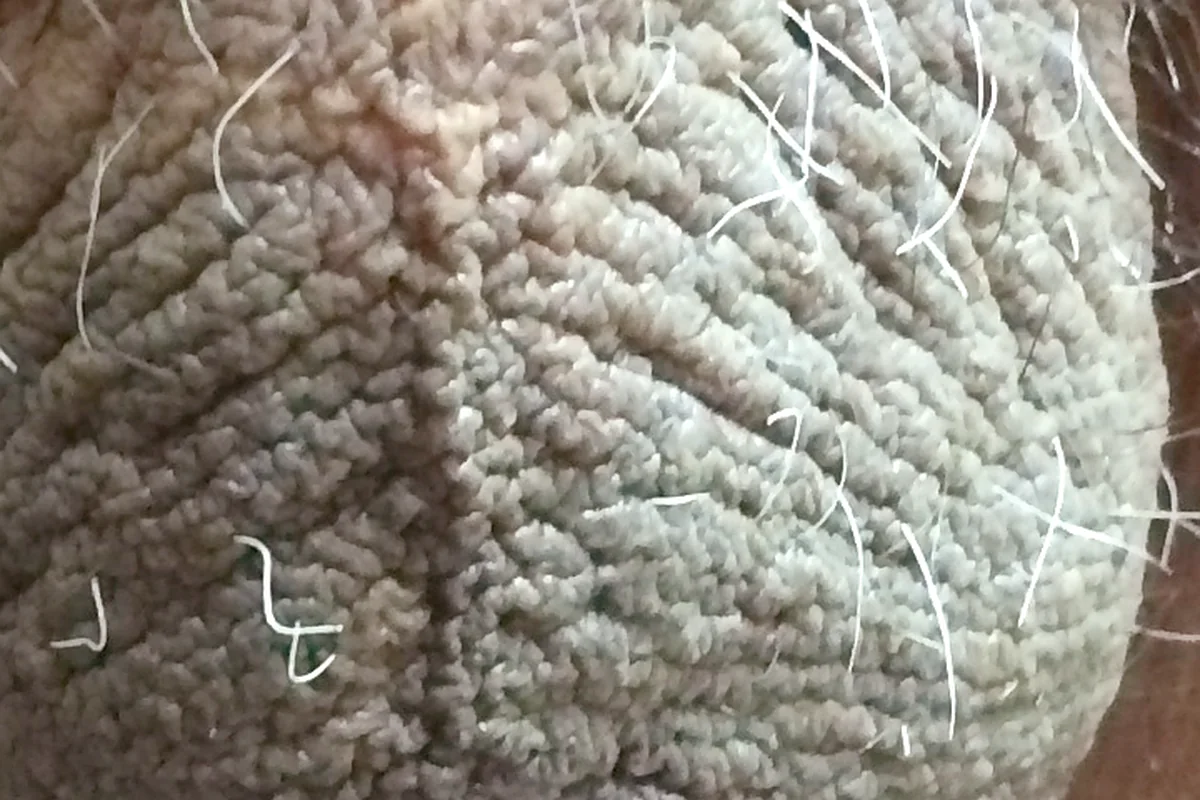 Concealed-Scar Scrotal Technique™The incision sits in the natural scrotal fold and is minimally visible once healed.
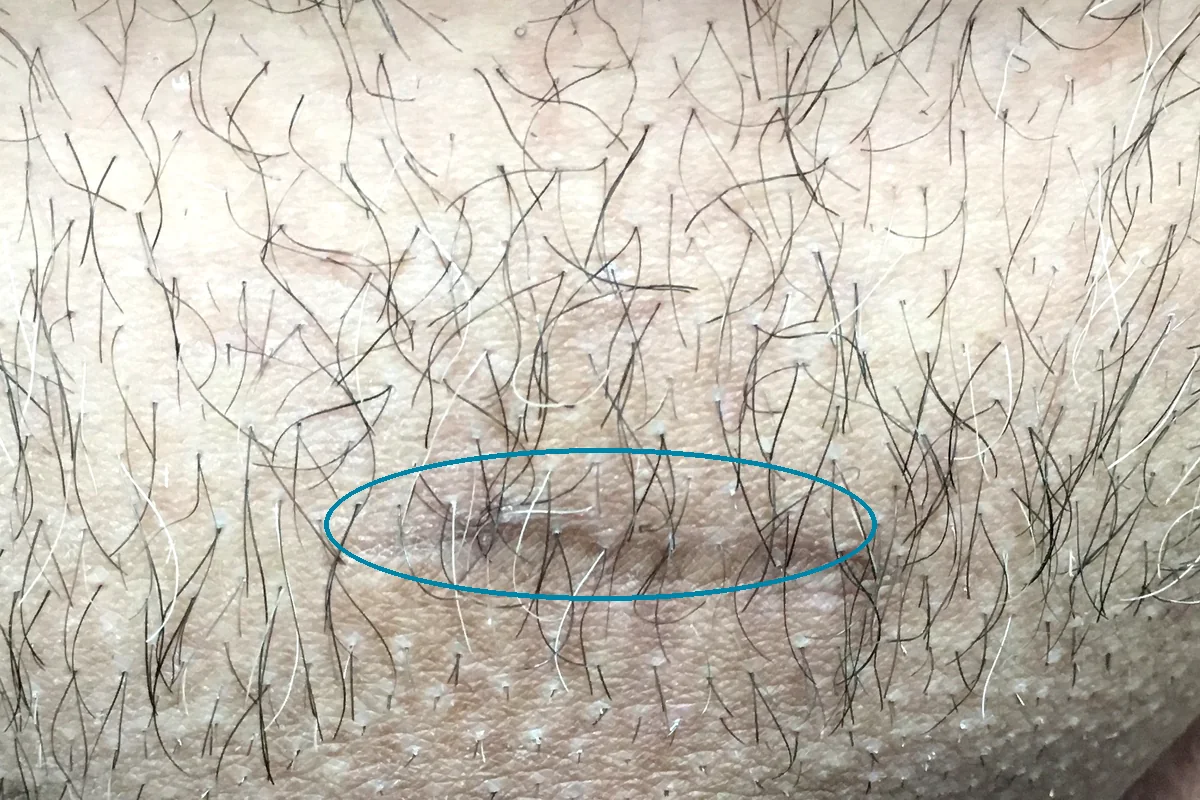 Infrapubic approachLeaves a transverse scar above the pubic bone (circled).


Request a Confidential Consultation
Dr. Edward Gheiler, MD, FACS is a board-certified Miami urologist and one of the highest-volume Boston Scientific AMS 700 three-piece inflatable penile implant surgeons in the United States. He performs more than 400 inflatable penile prosthesis cases each year using a scrotal-only-incision technique he developed — a 15-to-20-minute outpatient procedure that leaves a concealed, minimally visible scar — with a reported 0.3% baseline infection rate, and is a referral destination for revision and complex implant cases nationally and internationally.
Credentials
400+
Inflatable penile implant cases per year
0.3%
Baseline infection rate, single-surgeon series
15-20 min
Operative time, scrotal-only technique
Outpatient
Same-day discharge for primary cases
33+yrs
In urologic surgery
FACS
Fellow, American College of Surgeons
Dr. Gheiler developed a scrotal-only-incision approach to the three-piece inflatable penile implant — a single small scrotal incision with a concealed, minimally visible scar, and no infrapubic tubing risks.
He is a referral destination for revision surgery and super-difficult cases, and is featured on Boston Scientific's clinical education platform alongside Dr. Mohit Khera (Baylor) and Dr. Kansas on AMS 700 device selection and infection-mitigation technique.
Why a three-piece inflatable implant
Not every patient with erectile dysfunction needs surgery, and not every surgical patient needs the same device. For men who want a dependable, permanent solution, whether or not they have tried pills, injections, vacuum therapy, or shockwave, the three-piece inflatable penile prosthesis remains, in Dr. Gheiler’s experience, the most natural-feeling and most durable of the surgical options.
Three-piece inflatable
(AMS 700)
(AMS 700)
Two-piece
inflatable
inflatable
Malleable/
semi-rigid rod
semi-rigid rod
Erection on demand
Yes
Yes
(firmer flaccid state)
(firmer flaccid state)
Always partially rigid
Natural flaccid appearance
Yes
Limited
No
Concealability
Best
Good
Limited
Reservoir placement
Abdomen (separate)
Built into
pump /scrotum
pump /scrotum
None
Best For
Most ED patients seeking implant surgery
Limited abdominal access (e.g., prior surgery)
Limited manual dexterity
About the Boston Scientific AMS 700
The AMS 700 is Boston Scientific's three-piece inflatable penile prosthesis. It has three components: two cylinders placed inside the corpora cavernosa of the penis, a pump positioned in the scrotum, and a fluid reservoir placed behind the abdominal wall. Squeezing the pump moves fluid from the reservoir into the cylinders, producing an erection that lasts as long as the patient chooses. Pressing the deflate valve returns the device to its flaccid state.
The three AMS 700 variants Dr. Gheiler implants
- AMS 700 LGX. Length and girth expansion. The cylinders expand in both dimensions, recreating the most natural feel. Most common choice for primary cases.
- AMS 700 CX. Girth-only expansion. Used when length expansion is not anatomically advisable.
- AMS 700 CXR. Narrow-base version of the CX cylinders. Used in revision cases or anatomically smaller patients.
Why InhibiZone™ matters
Every AMS 700 implanted by Dr. Gheiler comes coated with InhibiZone — the only implantable erectile-dysfunction device on the market impregnated with two antibiotics: minocycline and rifampin. The coating releases antibiotic at the implant surface during the critical first hours after surgery, when bacterial colonization is most likely to begin. Dr. Gheiler reports a single-surgeon baseline infection rate of 0.3%.*
The procedure — Dr. Gheiler's scrotal-only-incision technique
Dr. Gheiler performs every AMS 700 implant through a single small incision in the scrotum — a scrotal-only-incision technique that he developed and has refined across more than 400 cases per year. All three components (cylinders, pump, reservoir) are placed through that one incision. Operative time is 15 to 20 minutes. The procedure is performed under general anesthesia on an outpatient basis — patients arrive in the morning and go home the same afternoon.
Why a scrotal-only incision, and why not infrapubic
The two traditional approaches to a three-piece inflatable penile prosthesis are penoscrotal (an incision at the junction of the penis and scrotum) and infrapubic (an incision above the pubic bone). Dr. Gheiler does not perform the infrapubic approach, for three reasons that directly affect the patient:
- Visible scar. The infrapubic incision sits above the pubic hairline and leaves a scar that is visible to the patient and to a partner. Dr. Gheiler's scrotal-only incision is hidden in the natural folds of the scrotum so the scar stays concealed and is minimally visible in everyday or intimate settings once healed.
- Pump placement and migration. From an infrapubic incision, the pump is positioned more remotely and can migrate over time, making it harder to find and use. A scrotal incision lets Dr. Gheiler seat the pump in its ideal position under direct vision.
- Visible tubing in thin patients. In leaner patients, the tubing that connects the components can become noticeable under the skin when the implant is placed through an infrapubic approach. The scrotal-only technique avoids this entirely.
The 15-to-20-minute operative time reflects high case volume (more than 400 IPP cases per year) and a workflow Dr. Gheiler has built specifically around the scrotal-only approach. Shorter operative time also means less anesthesia exposure, lower infection risk, and faster recovery for the patient.
Revision surgery and super-difficult cases
Dr. Gheiler is a referral destination for patients whose implants were placed elsewhere and didn't go right — infected implants, mechanically failed devices, migrated pumps, malpositioned reservoirs, or implants in patients with prior pelvic surgery, severe Peyronie's disease, or significant scar tissue. He sees revision and complex cases routinely, including patients referred from other urologists across the United States and internationally.
Timeframe
Day of surgery
Week 1
Weeks 2–3
Weeks 4–5
Weeks 6–8
What to expect
Same-day discharge for primary cases. 15-to-20-minute outpatient procedure under general anesthesia. Pain controlled with oral medication.
Discomfort and scrotal swelling are normal. Light walking encouraged; no lifting over 10 lbs. Showering allowed after 48 hours.
Most patients return to desk-based work. Discomfort fades. First post-op visit with Dr. Gheiler.
Dr. Gheiler teaches the patient to cycle the device — daily inflation/deflation to stretch the cylinders and condition surrounding tissue.
Sexual activity is permitted. Most patients report that the device feels natural and is invisible to partners in clothing or unclothed.
Outcomes & complications — the honest version
The following numbers come from Dr. Gheiler's single-surgeon series and from the broader peer-reviewed literature on the AMS 700.
- Infection rate. 0.3% baseline in Dr. Gheiler's single-surgeon series.*
- Mechanical failure. Modern three-piece inflatables have published five-year survival rates above 90%. Mechanical issues are uncommon and almost always repairable.
- Patient satisfaction. Peer-reviewed studies on the AMS 700 consistently report partner-reported satisfaction above 85%, and patient-reported satisfaction above 90%, at one year.
- Length and girth. The AMS 700 LGX restores erection — it does not create additional length or girth beyond the patient's pre-ED baseline. Patients seeking cosmetic enlargement are not candidates for this procedure.
- When revision is needed. If a component fails or migrates, revision surgery is performed and is usually shorter than the original procedure.
Who is a candidate
An inflatable penile implant — and Dr. Gheiler's scrotal-only-incision technique specifically — is appropriate for men who:
- Have erectile dysfunction and want a permanent, on-demand solution (previous treatment with pills, injections or a pump is not required)
- Have not had durable success with injection therapy or vacuum-erection devices
- Have undergone radical prostatectomy and have post-surgical neurogenic ED
- Have Peyronie's disease with significant curvature and ED
- Already have an implant that has failed, become infected, migrated, or eroded — and need revision surgery
- Have a complex anatomy from prior pelvic surgery, scar tissue, or radiation that has discouraged other surgeons
- Want a discreet result with no scar visible above the pubic line and a technique designed to keep tubing from being visible
- Want a long-lasting, on-demand solution that does not require pre-planning before intimacy
- Are medically cleared for elective surgery under general anesthesia
- Understand the device is for restoring on-demand erection, not for cosmetic enlargement
Who is not a candidate
- Active urinary, prostate, or systemic infection at the time of surgery
- Patients seeking cosmetic length or girth without ED
- Uncontrolled diabetes or other conditions that would unacceptably elevate infection risk
Insurance & cost
Inflatable penile implant surgery is covered by Medicare when medical necessity is documented, and most major commercial plans cover it as well, subject to each plan's exclusions and prior authorization. Coverage is not guaranteed until verified: Happy Urology accepts most major plans, checks each patient's individual benefits, and processes the prior-authorization paperwork.
- Medicare — typically covered with deductible and co-insurance
- Commercial insurance (Aetna, BCBS, Cigna, United, Humana) — typically covered after prior authorization
- Self-pay — transparent bundled pricing available for patients without coverage or those traveling from outside the United States; quoted at the consultation
- Travel-from-abroad patients — concierge coordination of hotel, transportation, and post-op stay
Travel to Miami for your implant
A meaningful share of Dr. Gheiler's implant patients travels to Miami from outside South Florida — from every region of the United States, as well as the Caribbean, Latin America, and beyond. Miami International Airport is 20 minutes from the Hialeah/Miami Lakes surgical center, and Dr. Gheiler and his team see patients in English, Spanish, and Hebrew.
How travel works
- Step 1 — Virtual consultation. Secure video visit with Dr. Gheiler. Records review, candidacy decision, scheduling.
- Step 2 — Arrive 24–48 hours before surgery. In-person pre-op visit at the office in Hialeah/Miami Lakes.
- Step 3 — Same-day surgery. Outpatient procedure at the affiliated surgical center.
- Step 4 — Stay locally for 5–7 days. Hotel partners within 10 minutes of the office. Post-op visit before you fly home.
- Step 5 — Remote follow-up. Virtual visits for the 6-week and 3-month follow-ups so you do not need to fly back.
Frequently asked questions
What is an inflatable penile implant?

An inflatable penile implant — also called an inflatable penile prosthesis or IPP — is a discreet, surgically placed device that restores the ability to have an erection on demand. The three-piece version has two cylinders inside the penis, a pump in the scrotum, and a fluid reservoir behind the abdominal wall. Squeezing the pump produces an erection; pressing the release valve returns it to flaccid.
Is the AMS 700 the same as the Boston Scientific implant?
Yes. The AMS 700 is Boston Scientific's three-piece inflatable penile prosthesis. AMS (American Medical Systems) was acquired by Boston Scientific in 2015, and the AMS 700 product line continues as Boston Scientific's flagship inflatable implant.
Who is a candidate for a three-piece inflatable penile implant?
Men with erectile dysfunction who want a dependable, permanent solution, whether or not they have tried oral medication, injection therapy, vacuum devices, or shockwave therapy. Common patient profiles include post-prostatectomy ED, Peyronie's disease with significant curvature, and ED related to diabetes, vascular disease, or pelvic trauma.
How is the surgery performed?
Under general anesthesia, through a single small scrotal incision. Dr. Gheiler developed this scrotal-only-incision technique, which places all three components of the AMS 700 (cylinders, pump, and reservoir) through that one incision. He does not perform the infrapubic approach. Patients go home the same afternoon.
How long does the surgery take?
15 to 20 minutes for primary cases in Dr. Gheiler's hands, reflecting more than 400 cases per year of focused experience with the scrotal-only technique. Revision and complex cases take longer depending on what needs to be repaired.
Will I have a visible scar?
Dr. Gheiler's scrotal-only incision is hidden in the natural folds of the scrotum, so the scar stays concealed and is minimally visible to the patient or a partner once healed. By contrast, the infrapubic approach used by some surgeons leaves a scar above the pubic bone.
Why does Dr. Gheiler not use the infrapubic approach?
Three reasons. First, the infrapubic incision leaves a visible scar above the pubic bone. Second, the pump tends to sit in a more remote location and can migrate over time. Third, in thin patients, the tubing connecting the components can become visibly noticeable under the skin. The scrotal-only-incision technique Dr. Gheiler developed is designed to avoid all three of these issues.
I had an implant placed somewhere else and it isn't right. Can Dr. Gheiler fix it?
Yes. Revision and complex implant cases are one of Dr. Gheiler's sub-specialties. Patients are referred to him from across the United States and internationally for failed, infected, malpositioned, or eroded implants, as well as for implants in patients with prior pelvic surgery, severe Peyronie's disease, or significant scar tissue. Request a confidential virtual consultation to send records for review.
What is recovery like after a penile implant?
Most patients return to desk-based work in 1 to 2 weeks. Heavy lifting is restricted for the first month. Sexual activity is permitted at 5 to 6 weeks once tissue has healed and Dr. Gheiler has taught the patient to cycle the device.
When can I have sex after an inflatable implant?
Five to six weeks after surgery, after Dr. Gheiler has confirmed proper healing and instructed the patient on using the device.
What is the infection rate with the AMS 700?
Dr. Gheiler reports a single-surgeon baseline infection rate of 0.3%, attributable to high case volume (more than 400 cases per year), strict infection-prevention protocol, and the InhibiZone (minocycline + rifampin) coating used on every device he implants.*
How long does an inflatable penile implant last?
Modern three-piece inflatable prostheses have published five-year device-survival rates above 90%. Many implants last well over a decade. If a component fails, revision surgery can replace the affected part.
Does insurance cover penile implant surgery?
Often, yes. Medicare covers inflatable penile implant surgery when medical necessity is documented, and many commercial plans (Aetna, BCBS, Cigna, United, Humana) do as well, subject to each plan's exclusions and prior authorization. Coverage is not guaranteed until verified: Happy Urology checks each patient's individual benefits and handles prior authorization.
Can I travel to Miami for the procedure?
Yes. Dr. Gheiler treats patients who travel to Miami from across the United States and internationally. A virtual consultation, a 5 to 7 day local stay around surgery, and remote follow-ups make travel straightforward. The team sees patients in English, Spanish, and Hebrew.
Will my partner notice the implant?
When deflated, the implant is hidden inside the body and the pump sits discreetly in the scrotum, indistinguishable in appearance from normal anatomy. Most partners cannot tell a properly placed three-piece implant is present, even during intimacy.
What is the difference between AMS 700 LGX, CX, and CXR?
The LGX cylinders expand in both length and girth (the most common primary choice). The CX expands in girth only. The CXR is a narrow-base version of the CX used in revision cases or anatomically smaller patients. Dr. Gheiler selects the variant at the time of the pre-op evaluation.
Is a penile implant reversible?
The implant can be surgically removed, but doing so does not restore the patient's prior erectile function — the tissue inside the corpora cavernosa is reshaped by the cylinders. Patients should consider an inflatable implant a permanent solution.
What if I've already had prostate cancer surgery?
Post-prostatectomy ED is one of the most common reasons men come to Dr. Gheiler for an implant. Once the prostatectomy site has healed and oncologic surveillance is stable, an inflatable implant is often the most effective option for restoring sexual function.
Is Dr. Gheiler a Center of Excellence for penile implants?
Yes. Dr. Edward Gheiler is a Boston Scientific AMS 700 Inflatable Penile Prosthesis Center of Excellence and was among the first physicians in the world to earn the designation, in the program's first month (February 2024). He has also been a Castle Connolly Top Doctor since 2022.
Will a penile implant make my penis shorter?
Not when it is sized correctly. A penile implant is fitted to the full length of your natural erectile chambers. Many men keep their length, and some regain length that erectile dysfunction had reduced over time. Precise sizing during surgery is what protects length. Individual results vary.
About Dr. Edward Gheiler
Dr. Edward Gheiler, MD, FACS is a board-certified urologist who has been in practice since 1998 and has cared for patients in South Florida since 1999. He earned his medical degree from the Albert Einstein College of Medicine of Yeshiva University in 1992, completed his urology and urologic-oncology training at Wayne State University in Detroit, and served as a faculty member in the Department of Urology at the University of Miami.
His Hialeah and Miami Lakes practice — Happy Urology / Uro Feliz — performs more than 400 inflatable penile prosthesis cases each year, with a reported 0.3% baseline infection rate. Every procedure is performed through a scrotal-only incision — a technique Dr. Gheiler developed and refined — completed in 15 to 20 minutes on an outpatient basis, with a concealed, minimally visible scar. He is also a referral destination for revision and complex implant cases, including patients sent to him by other urologists across the United States and internationally.
Dr. Gheiler directs a penile-implant teaching center that has trained visiting urologists from across the southeastern United States, the Caribbean, and Latin America, and appears on Boston Scientific's clinical education platform discussing AMS 700 device selection and infection-mitigation technique alongside Dr. Mohit Khera (Baylor College of Medicine) and Dr. Kansas.
Dr. Gheiler is a Fellow of the American College of Surgeons. He sees patients in English, Spanish, and Hebrew.
References
- Boston Scientific — AMS 700 Inflatable Penile Prosthesis (Healthcare Professional resources)
- Boston Scientific — Clinical Perspective with Drs. Gheiler, Khera and Kansas on AMS 700 device considerations
- American Urological Association — Erectile Dysfunction Clinical Guideline
- Sexual Medicine Society of North America — patient resources
- PubMed — peer-reviewed publications co-authored by Dr. Gheiler
- Dr. Gheiler — Doximity profile
- Dr. Gheiler — Healthgrades profile (4.8★)
- Aquablation — Dr. Gheiler physician profile

back to top
Wondering whether an implant is right for you? See every ED treatment option and how men choose between them.
Getting a penile implant in Miami: what should you know first?
If you are searching for a penile implant in Miami, three things matter more than anything else: who does the surgery, how often they do it, and how honestly they explain what to expect. Dr. Edward Gheiler, MD, FACS performs more than 400 inflatable penile implant procedures a year at his Hialeah practice, minutes from Miami Lakes and Doral, with consultations in English and Spanish. The evaluation itself is straightforward — a confidential conversation about your history, what treatments you have tried, and whether an implant is the right next step for you. Out-of-town and international patients can start with a virtual consultation before traveling.
See also: penile implant surgery in Miami: the local guide · the AMS 700 device, explained · what a penile implant costs in Miami · the week-by-week recovery timeline · request a confidential consultation